
About us
Crucible is a private UK biopharmaceutical company working to advance groundbreaking innovations in neuroscience.
We are a collaboration of highly qualified scientists. Our work originates from the Sheffield Institute for Translational Neuroscience (SITraN) and the Sheffield NIHR Biomedical Research Centre (BRC) at the University of Sheffield – both internationally recognised institutes in neurodegenerative disease research.



Focus on MND and FTD
Focus on MND and FTD
News
Crucible Therapeutics announces the appointment of Dr Cliff Holloway as Chief Executive Officer
Crucible Therapeutics, a biopharmaceutical company developing novel therapies for amyotrophic lateral sclerosis (ALS) and other neurodegenerative diseases, today announced the appointment of Dr Cliff Holloway as Chief Executive Officer. Dr Holloway will also join the company’s Board of Directors.
Crucible Therapeutics and SITraN secure £2.3 million Innovate UK Biomedical Catalyst award to develop breakthrough siRNA therapies that address underlying causes of ALS
Crucible Therapeutics, a biotechnology company developing novel gene therapies for neurodegenerative diseases, is pleased to announce that it has been awarded a substantial £2.3M grant from Innovate UK’s Biomedical Catalyst program …
University of Sheffield spinout company Crucible Therapeutics raises £5 million to advance pioneering treatments for neurological diseases
University of Sheffield spinout company, Crucible Therapeutics, a biotechnology company developing novel therapies to treat amyotrophic lateral sclerosis (ALS), and frontotemporal dementia (FTD), has secured £5 million financing from Northern Gritstone and Argobio Studio.
About us
Crucible is a private UK biopharmaceutical company working to advance groundbreaking innovations in neuroscience.
Scientific Approach
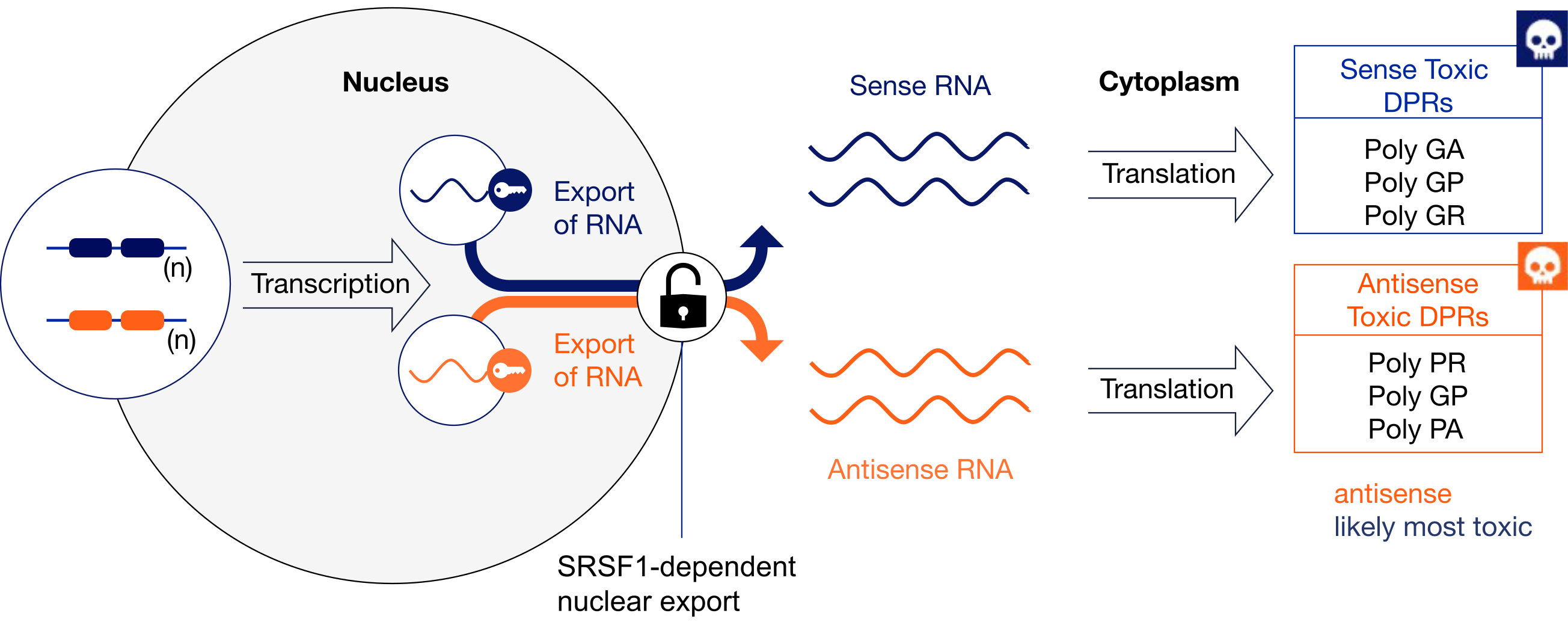
Genetic mutations involving repeat expansions in the C9ORF72 gene are the most common genetic causes of ALS and FTD. The faulty gene creates repeating RNAs that are transported from the cell’s nucleus into the cytoplasm where they generate toxic proteins known as dipeptide repeat proteins (DPRs). In addition, in several neurodegenerative diseases including ALS and Alzheimer’s disease, toxic TDP-43 aggregates are a frequent hallmark of disease. TDP-43 mislocalization the cytosol of neurons leads to RNA dysfunction and cytotoxicity. Pathology involving TDP-43 is present in 97% of patients with ALS, 50% of patients with FTD, up to 57% of Alzheimer’s patients and up to 7% of patients with Parkinson’s disease.
Crucible is developing novel therapies that prevent rogue RNAs from escaping into the cytoplasm where they become toxic and damage cells. Our approach disrupts the production of both toxic dipeptide repeats (DPRs) and TDP-43 aggregates meaning that is relevant for both C9ORF72- and Sporadic-ALS populations and other neurodegenerative diseases. Production of toxic DPRs is predicted to be the major cause of disease progression in patients who possess the C9ORF72 mutation, whilst TDP-43 mislocalisation and aggregation occurs in 97% of ALS patients.
In recent years, RNA interference (RNAi) has become an established technology that can reliably rid patients of disease-causing or disease-enabling genes or proteins. RNAi therapies can be delivered to patients as short-interfering RNAs (siRNA) or as short-hairpin RNAs with the latter typically being delivered as part of a viral vector (e.g. AAV). Crucible is pursuing both approaches for the treatment of ALS, FTD and other neurodegenerative diseases.
